
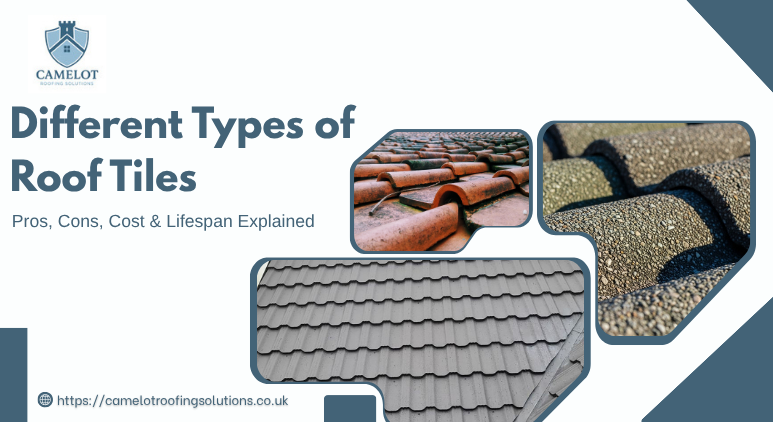
Choosing the right type of roof tiles in the UK isn’t just about appearance; it’s about weather resistance, longevity, maintenance costs, and compliance with local building styles. With the UK’s mix of rain, wind, and seasonal temperature changes, selecting the right material is essential for long-term performance.
In this fully explained guide, we’ll cover different types of roof tiles, including their pros, cons, lifespan, cost, and best use for which type of property, helping you make the best decision for your home.
Poor tile selection or installation can also lead to issues such as a leaking roof over time, especially in areas exposed to heavy rain and wind.
Why Choosing the Right Type of Roof Tiles Matters
Before diving into the types, it’s worth understanding what’s actually at stake. The wrong roofing material can lead to:
- Premature failure and costly replacements
- Poor insulation and skyrocketing energy bills
- Water damage, mould, and structural rot
- Voided home insurance claims
- Reduced property resale value
The right roof tile, on the other hand, adds decades of protection, boosts curb appeal, and can even increase your home’s market value by 5–15%.
Choosing the right roofing material can be complex. Speak with trusted roofing contractors in Hackney to get expert recommendations based on your home’s structure, budget, and UK weather conditions.
Different Types of Roof Tiles In the UK
1. Clay Roof Tiles
Clay roof tiles are the definitive traditional British roofing material. Walk through any historic English town, Bath, York, Canterbury, Ludlow, Rye, and you’ll see them everywhere. Those warm terracotta reds, mellow ochres, and rich russet browns define the roofscapes that make English vernacular architecture so instantly recognisable. They’ve graced British rooftops for over 700 years, and they remain one of the finest roofing options available today.
Average Cost: £35 and £70 per m² for materials
Lifespan: 50 to 100+ years

Pros
- Extraordinary longevity, many original Victorian clay tile roofs from the 1880s are still performing excellently today.
- Colour permanence fired through the body of the tile; it never fades, peels, or washes away.
- Excellent frost resistance, high-quality clay tiles have very low water absorption rates.
- Naturally fire-resistant, completely non-combustible with a Class A fire rating
- Very low maintenance once properly installed on a sound structure
- Environmentally friendly, made entirely from natural clay with no synthetic additives
- Highly attractive natural colour and texture variation give each roof genuine individuality
- Strongly favoured by conservation officers and listed building authorities
Cons
- Heavy: typically 40–75 kg per square metre; structural assessment required before installation
- Brittle: individual tiles can crack if struck by heavy debris or walked on without proper crawl boards.
- Higher upfront cost than concrete or synthetic alternatives
- Pitch restrictions: plain clay tiles require a minimum roof pitch of 35°–40°
- Matching original tiles for repairs on older roofs can be difficult and costly
Best For
Period cottages, farmhouses, Victorian and Edwardian terraces, Georgian properties, and any home where traditional British aesthetics matter. Essential for conservation areas and listed buildings.
Common UK Clay Roof Tile Types
Plain Clay Tiles:
The most quintessentially British clay tile. Small, flat, and rectangular, typically 265mm x 165mm, laid in a double-lap pattern that ensures every point on the roof is covered by at least two tile layers. The default choice for cottages, farmhouses, and Victorian terraces across England.
Clay Pantiles:
An S-shaped roll-and-trough profile with Dutch origins, introduced to Britain via trade routes in the 17th century. Strongly associated with East Anglia, Lincolnshire, and the East Midlands. Larger than plain tiles, faster to lay, and visually distinctive.
Roman Tiles:
A flat tile with a rounded roll cover, creating a cleaner profile than the full S-curve of pantiles. Found on certain ecclesiastical and heritage buildings.
Double Roman and Bold Roll Tiles:
Larger interlocking clay tiles with a more pronounced rustic profile are popular on farmhouses and rural properties.
Handmade Clay Plain Tiles:
The premium end of the clay tile market. Individually hand-formed, producing slight variations in shape, texture, and colour that give the roof genuine depth and character. Commonly specified for listed buildings and high-end period restorations.
2. Concrete Roof Tiles
Concrete roof tiles became the dominant roofing material in the UK during the post-war building boom of the 1950s, 60s, and 70s, when millions of homes needed roofing quickly and affordably. They remain widely used on new builds and re-roofing projects across Britain today. Not glamorous, but practical, robust, and considerably kinder to the household budget.
Average UK Cost: £20–£35 per m²for material only
Lifespan: 40–75 years

Pros
- Affordable: the most budget-friendly pitched roof tile for most UK homeowners
- Extremely durable and impact-resistant
- Fire-resistant: Class A rating
- Wide variety of profiles, colours, and textures
- Widely available replacement tiles are easily sourced from builders’ merchants nationwide
- .Good wind resistance with interlocking profiles
Cons
- Colour fading: surface-coated tiles fade noticeably over 10–20 years
- Susceptible to moss, algae, and lichen growth in the UK’s damp climate, an ongoing maintenance commitment
- Heavy 40–60 kg per square metre; structural assessment needed
- Shorter lifespan than clay or natural slate, many 1970s concrete roofs are now reaching the end of their life
- Can look noticeably mass-produced in period settings
Best For
Post-war suburban housing, new-build properties, extensions, and any project where keeping initial costs down is the primary consideration.
Common UK Concrete Tile Types
Interlocking Concrete Tiles:
By far the most common type across post-war British housing. Large-format tiles with interlocking edges that join adjacent tiles together. Fast to lay and produced by major UK manufacturers, including Marley and Redland.
Concrete Plain Tiles:
Designed to mimic clay plain tiles at a lower price point. Laid in the same double-lap pattern.
Slate-Effect Concrete Tiles:
Flat profiled tiles approximating the appearance of natural slate. Common in the 1980s and 1990s, new builds.
Interlocking Concrete Pantiles:
Large, bold, curved-profile tiles replicating the appearance of traditional clay pantiles. Popular in East Anglia and the East Midlands.
3. Natural Slate Roof Tiles
Natural Slate roof tiles are the prestigious roofing tiles of the British Isles. It is the material of choice for period properties across Wales, Scotland, the North of England, and the West Country, and it carries a heritage and quality that no manufactured material has convincingly replicated. Welsh slate, in particular, is regarded worldwide as one of the finest roofing materials ever quarried, and with very good reason.
Due to their long lifespan, slate roofs are less likely to require frequent repairs, making them a strong long-term investment when compared to other roofing materials.
Average UK Cost: £80 and £150 per m² for materials
Lifespan: 100–150+ years

Pros
- The longest lifespan of any roof tile: properly installed Welsh slate routinely lasts 100–150+ years
- Stunning, unique aesthetic: every tile is naturally different in colour and texture
- Completely non-combustible: solid rock cannot burn
- Extremely low water absorption: outstanding frost and biological growth resistance
- Minimal maintenance is required for decades at a time
- Significant property value uplift: consistently identified as a premium feature by surveyors and estate agents
- Fully sustainable: quarried natural stone requiring no chemical processing
- Universally favoured by planning authorities and conservation officers
Cons
- The most expensive roof tile option by a significant margin
- Very heavy,35–80 kg per square metre; structural assessment essential
- Requires specialist installation. Slating is a genuine craft skill, and a poor installer with premium slate is an expensive disaster
- Fragile underfoot cracks readily if walked on without proper crawl boards
- Matching tiles for repairs on older roofs can be genuinely challenging
Best For
Period properties of all types across the UK. Victorian terraces, stone cottages, Georgian townhouses, rural farmhouses. Essential for conservation areas, listed buildings, and national park properties.
Investing in natural slate roofing requires true craftsmanship. Choose trusted roofing services in Hackney, London to ensure a flawless finish, long-term durability, and complete peace of mind.
Common UK Slate Types
Welsh Blue-Grey Slate:
The gold standard. Dense, hard, and extraordinarily low in water absorption, typically below 0.3%, with outstanding frost resistance. Its distinctive blue-grey tone and subtle natural variation are widely considered the most beautiful roofing material available.
Cornish Slate (Delabole):
Britain’s oldest working quarry produces a distinctive silver-blue slate with a naturally riven texture. Highly prized for West Country properties.
Cumbrian Green Slate:
Distinctive green-hued slate with strong regional identity across the Lake District and North of England.
Spanish Slate:
The most widely used imported slate in the UK. Quality varies significantly; always specify EN 12326 Class T1 S1 for assured performance.
Chinese Slate:
Considerably cheaper, but quality is notoriously variable, with many products showing high water absorption and poor frost resistance. Approach with real caution for UK applications.
4. Synthetic / Composite Roof Tiles
Composite roof tiles, also called synthetic tiles, are one of the most exciting developments in the UK roofing market over the past two decades. Engineered from advanced polymer blends, recycled rubber, recycled plastics, or fibre-reinforced composites, they’re designed to replicate the appearance of natural slate, clay, or stone without the weight, fragility, or extraordinary price. The best products are genuinely impressive. The worst looks obviously artificial.
Average UK Cost: £80 and £300 per square metre (including installation)
Lifespan: 25–60 years

Pros
- Lightweight, typically just 7–20 kg per square metre; most UK properties need no structural modification whatsoever.
- Highly impact-resistant, many achieve Class 4 impact ratings (the highest available), far exceeding natural slate’s brittleness.
- Excellent frost and moisture resistance: good-quality composites have very low water absorption.
- Resistant to moss, algae, and lichen, non-porous surfaces resist biological growth far better than concrete or fibre cement.
- Eco-friendly credentials, many products are manufactured from recycled materials and are fully recyclable at the end of life.
- Lower installation costs and lighter weight mean faster laying and reduced labour costs.
- Increasingly, acceptance of composite slats is growing in conservation areas, though this varies by local authority.
Cons
- Aesthetic quality varies significantly; the best synthetic tiles are convincing, and cheaper products look obviously plastic. Always view physical samples in natural daylight before committing.
- Limited long-term track record, the oldest composite slate products are only 25-30 years old; we don’t yet have century-long performance data
- Not universally accepted by planners, always verify with your local planning authority before specifying in conservation areas or on listed buildings.
- Some formulations become brittle in prolonged severe cold; check the manufacturer’s cold-temperature performance specifications.
- Brand and quality vary enormously; research manufacturers’ reputation carefully and favour brands with substantial UK track records.
Best For
Properties where the look of slate or clay is desired but budget, structural capacity, or roof configuration make natural materials impractical. Excellent for extensions, outbuildings, barn conversions, and properties with lighter roof structures.
Types of Composite Roof Tiles
Recycled Rubber Composite Slate:
Made predominantly from recycled rubber and plastic. Highly impact-resistant and flexible. Brands such as EcoLogic and Envirotile are well established in the UK market.
Polymer Composite Slate:
Engineered polymer formulations offering excellent colour stability and dimensional accuracy. Products like Tapco Slate are widely used across the UK.
Fibre-Reinforced Composite Tiles:
Incorporating glass or carbon fibre for enhanced strength and rigidity. Used in both slate-effect and clay-effect profiles.
Stone-Effect Composite Tiles:
Some manufacturers produce composite tiles with stone aggregate surfaces bonded to a polymer substrate, creating a textured, natural-looking finish.
5. Metal Roof Tiles
Metal roof tiles have undergone a dramatic transformation over the past two decades. Once associated exclusively with industrial sheds and agricultural barns, modern metal roofing now comes in sophisticated tile profiles that convincingly replicate the appearance of clay, slate, wood shake, and stone, while delivering exceptional performance characteristics that most traditional tile types simply cannot match. In the UK, the category is growing steadily, particularly on contemporary builds, barn conversions, and high-specification renovation projects. Metal roofing systems are also used on lower-pitch structures and can sometimes overlap with applications found in flat-roof systems.
Average UK Cost: between £70 and £120 per square metre fully installed
Lifespan: 40–80+ years

Pros
- Exceptional longevity, particularly for zinc and standing seam systems
- Extremely lightweight: just 4–15 kg per square metre, meaning virtually no UK property requires structural modification
- Outstanding wind resistance tested to withstand winds well in excess of 140 mph; ideal for exposed UK locations
- Fire-resistant: Class A or B rating, depending on the system
- Environmentally excellent: steel and aluminium roofing typically contains 25–95% recycled content and is fully recyclable at the end of life
- Very low maintenance, resistant to moss, algae, rot, and corrosion
- Suitable for lower pitches than most traditional tiles, some systems work effectively from as low as a 3° pitch
- Energy-efficient reflective finishes reduce solar heat gain in summer
Cons
- Higher upfront cost than concrete or fibre cement
- Can be noisy during heavy rainfall, though proper underlayment and insulation substantially reduce this
- Thermal expansion and contraction can cause movement and, in poorly installed systems, creaking noises.
- Denting from large hailstones is possible with softer metals like aluminium.
- Requires experienced metal roofing installers; not all general roofers are competent with metal systems
- Standing seam profiles have a very contemporary aesthetic that doesn’t suit traditional British vernacular architecture.
Best For
Contemporary homes, self-builds, barn conversions, and agricultural buildings. Also excellent for coastal properties (particularly aluminium) and for any project on an exposed site where wind resistance is a priority. Stone-coated steel tiles offer a traditional aesthetic with modern performance for suburban re-roofing projects.
Common Metal Roofing Materials Used in the UK
Galvanised Steel:
The most common and affordable metal roofing material. Steel is coated with zinc (galvanised) or a zinc-aluminium alloy (Galvalume) to protect against corrosion. Often finished with stone chips or a polymer coating for aesthetic appeal and added weather resistance.
Aluminium:
Lighter than steel and naturally corrosion-resistant, making it particularly well suited to coastal UK locations where salt air would accelerate corrosion of unprotected steel. Requires no galvanising or protective coating.
Zinc:
A premium European roofing material growing in popularity for contemporary UK builds. Develops a natural blue-grey patina over time and is self-healing, with minor scratches and abrasions that repair themselves through oxidation. Very long-lasting and widely used in Scandinavia and Germany.
Standing Seam Steel and Aluminium Panels:
Sleek, modern panels with concealed fixings and raised seams. The most contemporary-looking metal roofing option, widely used on architect-designed self-builds and barn conversions.
Stone-Coated Steel Tiles:
Steel tiles with a surface coating of natural stone chips bonded with acrylic resin. Provides a more traditional tile appearance while retaining the structural and performance benefits of steel. Products such as Gerard and Decra are available in the UK.
6. Copper Roof Tiles
Copper roofing deserves its own dedicated section because it occupies a completely different position in the market from other metal options; it is unambiguously the most premium, longest-lasting roofing material available anywhere in the world, and it has been used on prestigious buildings across Europe for centuries. Westminster Abbey, the roofs of Versailles, and countless historic churches and civic buildings across Britain and the Continent all use copper as their roofing material of choice. That heritage tells you everything you need to know about its performance.
Average UK Cost: £200+ per square metre for materials
Lifespan: 50 to 100+ years

Pros
- The longest-lasting roofing material, copper roofs routinely last 200+ years. Documented examples in Europe exceed 400 years.
- Self-healing and completely self-protecting, the natural patina prevents any further corrosion without any coating, painting, or treatment.
- Extraordinarily beautiful; the evolving colour journey from bright copper to deep brown to verdigris is unlike any other roofing material
- Completely fire-resistant, copper is a metal; it simply cannot burn
- Very lightweight; 3–6 kg per square metre, the lightest mainstream roofing material available
- Zero maintenance, once installed, copper requires virtually no ongoing attention whatsoever
- Fully recyclable and infinitely valuable as scrap, copper retains significant material value throughout its lifespan
- Genuinely increases property prestige and value, a copper roof on a period or high-end property is a significant statement
Cons
- The most expensive roofing tile material, copper, commands a significant premium over all other options. This is not a budget choice under any circumstances.
- Theft risk, copper’s high scrap value makes it an attractive target for metal thieves. This is a genuine and serious concern in the UK. Insurance must reflect this risk.
- The initial bright copper colour can be considered garish or incongruous before the patina develops. This is purely subjective, but worth considering.
- Requires highly specialised installation; copper roofing demands experienced, specifically trained installers. There are relatively few competent copper roofers in the UK.
- Electrolytic corrosion risk if copper comes into direct contact with certain other metals, installation details must carefully manage material interfaces
- Copper runoff water can stain adjacent masonry and surfaces; the installation must account for this
Best For
Churches, historic public buildings, Grade I and II* listed buildings, and the very highest end of the residential market. Also used on feature roof sections, dormers, and bays on period properties, where a smaller area of copper can make a dramatic architectural statement without the prohibitive cost of a full copper re-roof.
Types of Copper Roof Tiles and Systems
Copper Standing Seam:
The classic copper roofing system. Interlocking panels with raised seams, allowing for thermal movement. Used on churches, civic buildings, and high-specification residential projects.
Copper Shingles and Tiles:
Individual tile formats that can be installed in patterns similar to natural slate or clay. Increasingly available for residential applications.
Pre-Patinated Copper:
Copper treated to accelerate the patina process, delivering a blue-green verdigris finish from day one. Available from specialist suppliers for projects where an immediate mature patina appearance is desired.
7. Solar Roof Tiles
Solar roof tiles represent the most significant roofing innovation of the 21st century. Rather than mounting separate photovoltaic panels on a conventional roof, as in the traditional approach to solar energy generation, solar roof tiles integrate photovoltaic cells directly into the tiles. The result is a roof that simultaneously protects your home and generates clean electricity from sunlight. Tesla’s Solar Roof brought the concept into mainstream awareness, though several manufacturers now offer solar tile systems in the UK market.
Average UK Cost: (£300 – £450 per square metre), £12,000–£16,000 for a typical 4kW system.
Lifespan: 25–40 years.

Pros
- Dual function: simultaneously provides full roofing protection and generates clean electricity from your roof surface
- Aesthetically superior to traditional solar panels: integrated tiles sit flush with the roof plane, producing a far cleaner, more architecturally refined appearance
- Reduces electricity bills significantly: the average UK solar roof can generate 3,000–5,000 kWh of electricity per year, depending on size, pitch, and orientation
- Eligible for Smart Export Guarantee payments: you receive payment for surplus electricity exported to the National Grid.
- Long-term financial return: Though upfront costs are high, the combination of bill savings and SEG income can deliver a meaningful return over the system’s lifespan
- Reduces carbon footprint: Generating your own clean electricity from sunlight directly displaces fossil fuel energy consumption
- Durable roof covering in their own right, solar tiles are designed to withstand UK weather conditions and come with long product warranties.
Cons
- Very high upfront cost: currently the most expensive roofing option per square metre. The financial case requires a long ownership horizon to stack up.
- The payback period is long: depending on system size, energy consumption, and electricity prices, it typically ranges from 12 to 20 years.
- Installation is highly specialised: there are relatively few competent solar tile installers in the UK; ensure any installer is MCS (Microgeneration Certification Scheme) certified.
- Performance is location- and orientation-dependent: south-facing roofs at a pitch of 30°–40° in sunnier parts of the UK (the South of England) generate substantially more energy than north-facing roofs in Scotland.
- Planning permission may be required, particularly on listed buildings or in conservation areas; solar tiles are generally more acceptable to planning authorities than traditional raised panels, but always check
- Repair and maintenance complexity: a damaged solar tile is more complex and expensive to replace than a conventional roof tile, as it involves both roofing and electrical work
- Battery storage adds further cost: to make the most of solar generation, a home battery system such as Tesla Powerwall is strongly recommended, adding £8,000–£12,000+ to the overall investment.
Best For
Eco-conscious homeowners in the South of England and other sunnier UK regions, with south- or south-west-facing roofs, planning for a long ownership horizon. Particularly compelling when combined with an electric vehicle (which can be charged from surplus solar generation) and a home battery system. Also increasingly relevant as UK electricity prices remain elevated.
UK Solar Roof Tile Products
Tesla Solar Roof:
The market leader globally, Glass solar tiles are integrated with non-solar tempered glass tiles, creating a seamless roof appearance. Available in the UK through Tesla’s installation network.
GB Sol (Welsh-manufactured):
A UK-manufactured solar slate system produced in Wales using photovoltaic cells embedded into slate-effect tiles. Designed specifically for integration with conventional slate roofs. Eligible for planning approval in more sensitive settings than some other systems.
SunRoof and similar integrated systems:
Several other European manufacturers produce integrated solar tile systems available through UK installers.
Roof-Integrated Solar Panels:
Technically, a step between traditional panels and true solar tiles, in-roof systems that sit flush with the roof plane rather than being raised above it. More widely available and generally more affordable than true solar tiles.
8. Fibre Cement Slate Tiles
Fibre cement slats have been specified across the UK since the 1970s and are a familiar sight on post-war housing estates, schools, and commercial developments. They sit broadly in the same aesthetic space as composite slats but use a different composition and carry one critical health and safety consideration that every UK homeowner must be aware of.
Average UK Cost: £40–£60 per m²
Lifespan: 20–50 years

Pros
- More affordable than natural slate with a broadly similar appearance at normal viewing distances
- Lighter than natural slate, typically 15–25 kg per square metre
- Good fire resistance
- Readily available from UK builders’ merchants
- Straightforward installation for any competent roofer
Cons
- Asbestos risk in pre-1990 installations, critical safety concern
- Higher water absorption than natural slate; more susceptible to frost damage and moss growth
- Colour fades over time
- Shorter lifespan than natural slate or composite alternatives
- Can become brittle and prone to cracking with age and freeze-thaw cycling
Best For
Budget-conscious re-roofing projects on non-period properties where planning conditions are straightforward
If you’re unsure which roofing material is best for your home, our expert roofers in London can guide you with professional advice tailored to your property. Get in touch today to make the right choice with confidence.
Complete Comparison Table: All UK Roof Tile Types
| Roof Tile Type | Cost (per m²) | Lifespan | Maintenance |
| Clay Roof Tiles | £35 – £70 | 50 – 100+ years | Very Low |
| Concrete Roof Tiles | £20 – £35 | 40 – 75 years | Low–Medium |
| Natural Slate Tiles | £80 – £150 | 100 – 150+ years | Very Low |
| Composite / Synthetic Tiles | £80 – £300 | 25 – 60 years | Low |
| Metal Roof Tiles | £70 – £120 | 40 – 80+ years | Very Low |
| Copper Roof Tiles | £200+ | 50 – 200+ years | Virtually None |
| Solar Roof Tiles | £300 – £450 | 25 – 40 years | Medium |
| Fibre Cement Slate Tiles | £40 – £60 | 20 – 50 years | Low |
When choosing between materials, it’s also worth considering long-term value alongside roof replacement costs in the UK rather than focusing only on initial pricing.
Conclusion
Choosing between the different types of roof tiles ultimately comes down to balancing cost, lifespan, maintenance, and the character of your property. In the UK, where roofs must withstand constant rain, wind, and temperature changes, selecting the right material is a long-term investment rather than a short-term decision. The performance of roof tiles also depends on proper drainage, as issues like leaking gutter joints can allow water to affect the roof edges over time.
For traditional homes and maximum lifespan, clay and natural slate are the best choices. If you’re looking for a more affordable and practical solution, concrete tiles remain a popular option. For modern, lightweight, and energy-efficient roofing, metal, composite, or solar tiles are excellent alternatives.
Ultimately, the best roof tile is the one that balances cost, lifespan, and suitability for your property and UK weather conditions. Always consult professional roofers in Hackney to ensure the right choice and proper installation for long-lasting results.
FAQs
Which type of roof tiles is best?
Natural slate and clay tiles are generally the best choice in the UK. They offer a long lifespan (100+ years), strong weather resistance, low maintenance, and a premium appearance, making them ideal for most homes, especially traditional properties.
Can roof tiles improve home insulation?
Yes, roof tiles can improve insulation when combined with proper underlayment and insulation systems. Materials like clay, slate, and concrete tiles help regulate temperature and reduce heat loss.
Which roof tiles are strongest?
Slate and metal roof tiles are the strongest in the UK, offering high durability, excellent weather resistance, and strong protection against wind and impact.
